
Proximate and Nutrition Compositions, FTIR Analysis of Date Seed Powder from Nigerian Date Fruit for Potential Industrial Applications
-
Muhammad Aminu Abubakar


Department of Industrial Chemistry, Mewar International University, KM 21, Abuja-Keffi, Expressway, Masaka, Nasarawa, Nigeria
Bilyaminu Alfazazi LoloDepartment of Industrial Chemistry, Mewar International University, KM 21, Abuja-Keffi, Expressway, Masaka, Nasarawa, Nigeria
Aliyu YususfDepartment of Industrial Chemistry, Mewar International University, KM 21, Abuja-Keffi, Expressway, Masaka, Nasarawa, Nigeria
Imoisi Chinyere
Department of Industrial Chemistry, Mewar International University, KM 21, Abuja-Keffi, Expressway, Masaka, Nasarawa, Nigeria
Awodi Godwin OwoichoDepartment of Industrial Chemistry, Mewar International University, KM 21, Abuja-Keffi, Expressway, Masaka, Nasarawa, Nigeria
Yusuf Yunusa PaiDepartment of Biotechnology, Mewar International University, KM 21, Abuja-Keffi, Expressway, Masaka, Nasarawa, Nigeria
Abdulrazak Shehu IsahDepartment of Biotechnology, Mewar International University, KM 21, Abuja-Keffi, Expressway, Masaka, Nasarawa, Nigeria
| Received 04 Mar, 2026 |
Accepted 20 Sep, 2026 |
Published 26 Sep, 2026 |
Background and Objective: Despite being a nutrient-dense byproduct of oil extraction, the chemical and nutritional profile of date seed powder is not yet comprehensively documented. This research investigates its proximate composition, FTIR spectra, and nutritional properties to identify potential applications within the food, livestock feed, and industrial industries. Materials and Methods: Date seed was obtained from Sokoto State, which is one of the states with an abundance of date plants. Proximate analysis was performed using standard methods, and the chemical composition was analyzed, and FTIR was employed to determine the functional groups. The date seed passed several processes, including cleaning, drying, grinding, and particle sizing to obtain the powder. The ash content was determined by incineration, fat content was assessed by the use of solvent extraction through a Soxhlet apparatus, protein content was quantified using the micro-Kjeldahl method, and crude fibre was measured by sequential digestion and ashing. Carbohydrate was calculated by difference. Results: Proximate analysis showed that date seed powder contained 5.0% moisture, 1.3% ash, 14.2% crude fibre, 2.0% crude fat, 12.6% crude protein, 64.9% carbohydrate, and 89.3% dry matter. FTIR analysis identified hydroxyl, methyl/methylene, ester/acetyl, carbonyl, and aromatic C = C functional groups at 3886-3660, 2948-2849, 1735, 1654, and 1597-1507 cm–1, respectively. These bands suggest the presence of cellulose, lipids, proteins, lignin, phenolic compounds, and other bioactive constituents. Overall, the findings indicate that date seed powder contains functional components with potential nutritional, antioxidant, and prebiotic properties. Conclusion: This study provides valuable information on the proximate and FTIR analysis as well as chemical composition of date seed powder. The results highlight the potential of date seed powder as a nutritious ingredient for food, pharmaceutical, and feed applications, while underscoring the importance of sustainable utilization of this underutilized resource.
| Copyright © 2026 Abubakar et al. This is an open-access article distributed under the Creative Commons Attribution License, which permits unrestricted use, distribution, and reproduction in any medium, provided the original work is properly cited. |
INTRODUCTION
Phoenix dactylifera, commonly known as the date palm, is a flowering-plant species in the palm family Arecaceae, cultivated for its edible sweet fruit called dates1. The exact origin of the date palm is considered to be lost in Antiquity2. However, it is certain that the date palm was cultivated as early as 4000 B.C. since it was used for the construction of the temple of the moon god near Ur in Southern Iraq-Mesopotamia3,4.
Date plant offers numerous health benefits due to their rich source of nutrients fiber and antioxidants that support brain, heart and gut health5.
Date palm fruit is a rich source of vitamins, minerals, dietary fiber, energy, and easily digestible and absorbable sugars that instantaneously replenish and revitalize the body specially after fasting condition. Mineral contents in date fruits include potassium, phosphorus, magnesium, and calcium5-7.
Date seeds, which constitute 6-15% of the total weight of the ripe date are actually a byproduct of date. It is normally discarded, used as an animal feed ingredient or turned into non-caffeinated coffee. Date seeds are composed of carbohydrates, dietary fiber, fat, ash and protein8-15.
Date seed has several amazing medicinal properties. It helps to prevent kidney and liver against toxicity or damage, useful in diabetes, prevents DNA damage and helps to fight various viral infections and a good source of antioxidant16-18.
Date seed powder is primarily composed of oleic acid, and lauric acid, with significant amounts of myristic, palmitic, and linoleic acid it is also rich in antioxidants like phenols and vitamin E. the table below shows the chemical compositions of date seed powder19-21.
Date seed powder finds applications in food as a caffeine-free coffee alternative, a nutritional additive for baking and smoothies, or a functional food ingredient to boost fiber and antioxidants20,21. It also has applications in cosmetic industry for exfoliants and anti-aging products, and in feed for livestock. Notwithstanding their inherent biochemical potential, date seeds are frequently relegated to agricultural waste, resulting in a substantial loss of bioactive resources. In the current climate of global food insecurity and the transition toward a circular economy, there is an urgent need for resource valorization. The recovery of these seeds aligns with modern requirements for sustainable resource management and the discovery of innovative functional ingredients for the global market22-25. This study provides a rigorous characterization and nutritional benchmarking of date seed powder. By mapping the physicochemical architecture and bioavailable nutrients of the seeds, this research aims to unlock their utility as a sustainable raw material. Ultimately, these findings facilitate the integration of date seed derivatives into novel food formulations and industrial applications, transforming a common byproduct into a high-value economic asset.
MATERIALS AND METHODS
Study area and sites: This study was conducted in Masaka, Nasarawa State, Nigeria, within the span of three months, specifically from September, 2025 to November, 2025. It is located at 9°N Latitude and 7.68°E Longitude and it is situated in an elevation of 640 m above sea level.
Sample collection and analysis
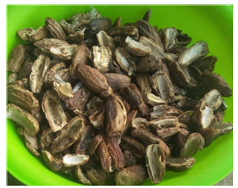
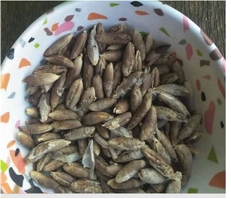
Preparation of date seed powder: The 3 kg of date seed was obtained as by-product from date fruit from Sokoto State Northern part of Nigeria which is often discarded, which will further be processed to give the seed powder after undergoing through the unit operations below. The whole date fruit is shown in Fig. 1, while the seeds recovered from the fruit are shown in Fig. 2.
|
|
Particle separation: Seeds were manually sorted to remove dirt and unwanted particles.
Cleaning: Seeds were washed with distilled water to remove residual dirt for subsequent food and pharmaceutical applications.
Drying: The seeds were artificially dried using a dryer to remove moisture.
Size reduction: The seeds were ground using a blender or grinding machine to reduce particle size and increase surface area for effective sieving.
Sieving: The ground material was sieved to separate fine particles from coarse particles, and the residue was discarded.
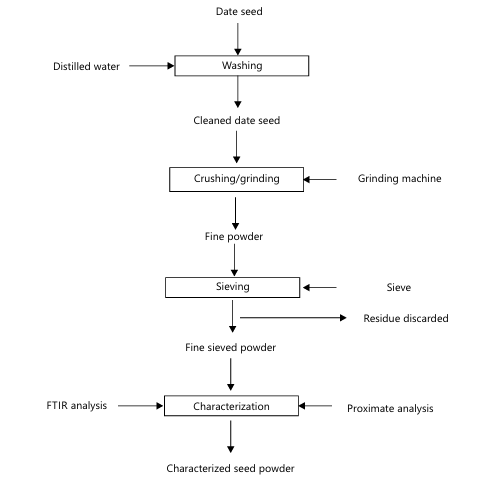
Characterization: The fine seed powder was subjected to proximate and FTIR analyses to determine its potential applications in the pharmaceutical, feed, and food industries. The overall process is summarized in the block flow diagram shown in Fig. 3. Table 1 presents the range of major chemical compounds reported for date seed.
Fourier transform infrared (FTIR) procedure for date seed powder: The functional groups of the date seed powder were identified using a PerkinElmer Spectrum Two FTIR spectrometer (Waltham, MA, USA). Sample preparation involved mixing 1-2 mg of the finely ground date seed powder with approximately 200 mg of spectroscopy-grade potassium bromide (KBr) to achieve an ideal 1:100 dilution. This mixture was thoroughly homogenized using an agate mortar and pestle and subsequently compressed into a thin, transparent disc using a hydraulic press at a pressure of 10 tonnes for approximately two minutes. Spectral data were collected in the mid-infrared region, ranging from 4000 to 400 cm–1, at a spectral resolution of 4 cm–1 over 32 co-added scans18.
|
| Table 1: | Chemical compositions of date seed powder | |||
| Compound | Percentage |
| Oleic acid | 41.3-52.5 |
| Lauric acid | 14-35.31 |
| Palmitic acid | 9.11-17.8 |
| Myristic acid | 8.83-16.7 |
| Linoleic acid | 4.4-11 |
| Stearic acid | 1.8-5.67 |
| Protein | 2.3-6.4 |
| Phenols | 0.64-1.27 |
| Tocopherols | 32-74 |
Proximate analysis of date seed powder: To determine some chemical compositions which are very crucial and can impact the properties and performance of date seed powder intended for various industrial application. These compositions are: Fibre, ash content, protein, dry matter, and carbohydrate content. Determinations of these chemical compositions are explicitly explained below19.
Determination of protein: The crude protein content of the date seed samples was quantified using the micro-Kjeldahl technique following standardized analytical protocols. Initially, 0.5 g of the powder was digested with concentrated H2SO4 in the presence of a catalyst until a clear solution was achieved. The resulting digest was then subjected to alkaline distillation with 40% NaOH, and the liberated ammonia was captured in a 4% boric acid receiver. Finally, the nitrogen concentration was determined through titration with 0.1 N HCl, and the total protein was estimated using a nitrogen-to-protein conversion factor of 6.25 (AOAC Method 991.20)19,20.
Determination of crude lipid content: The lipid content was determined as provided in the AOAC (2019) Method 920.3921. A clean, dried 500 mL round-bottom flask, containing a few anti-bumping granules, was weighed (W1), and 300 mL of Petroleum ether (40-60°C) for extraction was poured into the flask fitted with a Soxhlet extraction unit. The extractor thimble containing 20 g of the sample was fixed into the Soxhlet extraction unit. The round bottom flask and a condenser were connected to the Soxhlet extractor, and cold water circulation was put on. The heating mantle was switched on and the heating rate was adjusted until the solvent was refluxing at a steady rate. Extraction was carried out for six hours. The solvent was recovered, and the oil was dried in the oven at 70°C for 1 hr. The round-bottom flask containing the oil was cooled in the desiccator and then weighed W218:
 |
Tests for carbohydrates
Fehling’s test: Five mL of Fehling’s solution was added to 0.5 mg of extract and boiled in a water bath. The formation of a yellow or red precipitate indicates the presence of reducing power.
Benedict’s test for reducing sugars: Five millilitres of Benedict’s reagent was added to 0.5 mg of the extract and heated in a boiling water bath. The development of a red, yellow, or green precipitate indicated the presence of reducing sugars.
Carbohydrate content: The carbohydrate content was calculated by difference using the following formula:
The calculated carbohydrate content was expressed as g/100 g of sample26.
Determination of crude fibre content: The method described by AOAC (2019) Method 962.0921 was used. Two grams of sample were weighed out into a round-bottom flask. A 100 mL of 0.25M sulphuric acid Solution was added and the mixture boiled under reflux for 30 minutes. The hot solution was quickly filtered under suction. The insoluble matter was washed several times with hot water until it was acid-free. It was quantitatively transferred into the flask and 100 mL of hot 0.31 M sodium hydroxide solution was added and the mixture was boiled again under reflux for 30 min and quickly filtered under suction. The insoluble residue was washed with boiling water until it was base-free. It was dried to constant weight in the oven at 100°C, cooled in a desiccator and weighed (C1) was then incinerated in a muffle furnace at 550°C for 2 hrs, cooled in the desiccator, and reweighed (C2)23.
Calculation:
 |
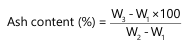
Determination of ash content: The AOAC (2019) Method 942.0521 was used. Porcelain crucibles were dried at 100°C for 10 min, cooled in a desiccator, and weighed (W1). Two grams of the sample were placed into the previously weighed porcelain crucible and weighed (W2). The sample was first ignited and transferred into a furnace, which was then set at 550°C. The sample was left in the furnace for eight hours to ensure proper ashing. The crucible containing the ash was then removed, cooled in the desiccator, and weighed W3. The percentage ash content was calculated as24:
 |
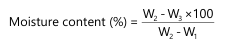
Determination of moisture content: The method described by AOAC (2019) Method 925.1021 was adopted. Clean crucibles were dried to constant weight in an air oven at 105°C, cooled in a desiccator and weighed (W1). Two grams of sample were accurately weighed into the previously labeled crucible and reweighed (W2). The crucible was dried in an oven to a constant weight (W3).
The percentage moisture content was calculated thus18:
 |
RESULTS AND DISCUSSION
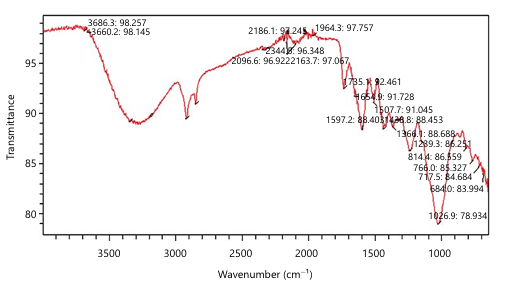
The results of the proximate and FTIR analyses of the date seed powder are presented in the following tables. The proximate analysis provides information on the nutritional composition of the powder, while FTIR analysis identifies the major functional groups present based on their characteristic absorption bands. Figure 4 displays the FTIR of the date seed powder, which shows the presence of various functional group which are very crucial for various industrial applications.
Based on the above information from Table 2 peak band at 3886, 3660 cm–1 indicate the presence of free hydroxyl groups which are not bonded and basically compose of cellulose edges, phenols and surface moisture which are basically useful as Antioxidants (phenols), help stabilize free radicals free OH and easier hydrogen- bonding with water and better solubility for bioactive if processed20.
Peak band at 3345 cm–1 (broad) indicates the presence of hydroxyl groups which are bonded basically consist of cellulose, hemicellulose, lignin, bond water, which are very crucial and useful as dietary fiber and satiety, bowel motility, prebiotic for gut flora, H-bonded OH retains water and reduces constipation18.
Bands at 2948, 2849 cm–1 indicate the presence of methyl and methylene groups with carbon hydrogen bonds in which methyl and methylene compose of Lipids (fatty acid, waxes) which are useful sources of fatty acids, energy and antioxidants18.
A 1735 cm is a peak band which signifies the presence of ester and acetyl which are composed up of Hemicellulose, acetyl, lipids (triglycerides) which are important source for acetylcholine precursor, mild anti-inflammatory, ester lipid and slow release energy, skin moisturizing if used in cosmetics18,20.
Peak band at 1654 cm–1 indicates the presence of carbonyl group and is compose of amide, protein and lignin which indicates the presence of Protein and amino acid for muscle repair, enzymes lignin C = C and phytol-pol and phenols with antioxidant, mild estrogenic activity.
Band at 1597, 1507 cm–1 suggest the presence of carbon-carbon (alkene) which is aromatic and basically composed up of dietary lignin and insoluble fiber, which can be use as prebiotic, can bind bile acid cholesterol, phenolic acids, antioxidant and anti-inflammatory.
|
| Table 2: | Results of the fourier transform spectroscopy analysis of date seed powder | |||
| Wavelength (cm–1) | Functional group | Components in date seed | Nutrition/Medicinal/other benefits |
| 3886, 3660 | O-H (Free) | Cellulose edges, phenols, surface moisture |
Antioxidants (phenols), help stabilize free radicals free OH and easier hydrogen- bonding with water and better solubility for bioactive if processed |
| 3345 (broad) | O-H (H-bonded) | Cellulose, hemicellulose, lignin, bond water |
Dietary fiber and satiety, bowel motility, prebiotic for gut flora, H-bonded OH retains water and reduces constipation |
| 2948, 2849 | C-H (CH2/CH3 ) | Lipids (fatty acid, waxes) | Energy (9kcal/g), source of essential fatty acids (omega-9) found in date in seed oil, lipophilic antioxidants(tocopherols) carried in lipids phase |
| 2344 | CO2 (artifact) | - | No benefit just atmospheric interface |
| 2186, 2096 | C=C/C=N (rare) | Usually absent (contaminated) | No health benefit |
| 1964 | C=C=C/overtone (weak) |
- | usually negligible |
| 1735 | C-O (ester/acetyl) | Hemicellulose, acetyl, lipids (triglycerides) |
Acetyl group and acetylcholine precursor, mild anti-inflammatory, ester lipid and slow-release energy, skin moisturizing if used in cosmetics |
| 1654 | C=O (amide protein) /C=C (lignin) |
Protein ( seed storage) and lignin |
Protein and amino acid for muscle repair, enzymes lignin C=C and phytol-pol and phenols with antioxidant, mild estrogenic activity |
| 1597, 1507 | Aromatic C=C (lignin) |
Lignin guaiacyl and syringyl unit) |
Dietary lignin and insoluble fiber, prebiotic, bind bileacid cholesterol phenolic acids, antioxidant and anti-inflammatory |
| 1488, 1366 | C-H bend (GH2/CH3 | Cellulose/hemicellulose, lipid | Fiber bulk, gut motility, satiety. Methyl groups volatile aroma compounds if pyrolyzed ( smoke flavor) |
| 1239 | C-O (ester/either)/ C-N (protein) |
Cross-links (lignin-carbohydrate complex) |
Cross-linking and resistance to digestion, slow fermentable fiber, maintains structure for colon health |
| 1026 | C-O-C (cellulose, | Polysaccharides (glucans, xylans) hemicellulose) |
Soluble and insoluble fiber, regulates blood glucose, prebiotic, absorbs toxins/ metals |
| 814, 766, 717 | C-H out of plan aromatics |
Lignin, waxes | Antioxidant, antimicrobial (preserve food, skin care) |
Peak band at 1488, 1366 cm–1 indicate the presence of methyl group and are composed of cellulose, hemicellulose and lipid which are excellent source of fiber18,20,22.
Findings from Table 3 demonstrated that the moisture content, ash content, crude fibre, crude fat, crude protein, carbohydrate, and dry matter are: 5.0, 1.3, 14.2, 2.0, 12.6, 64.9, and 89.3%, in date seed powder. The significance of these values are well explained individually below.
| Table 3: | Proximate analysis of date seed powder | |||
| Parameter | Values (%) |
| Moisture content | 5.0 |
| Ash content | 1.3 |
| Crude fibre | 14.2 |
| Crude fat | 2.0 |
| Crude protein | 12.6 |
| Carbohydrate | 64.9 |
| Dry matter | 89.3 |
Moisture content: Moisture content represents the amount of water held within a substance, such as agricultural products or geological materials. In this study, the date seed powder was found to have a moisture level of 5.0%, indicating a low water content that may enhance its shelf stability. This low moisture quantity is crucial for safety, quality and shelf life including microbial stability physical characteristics and processing efficiency22-24.
Ash content: This is a measure of the total amount of minerals present within the food, whereas the mineral content is a measure of the specific inorganic components present within a food, such as calcium (Ca), which is important for the formation of the skeleton. Sodium (Na), potassium (K), and chlorine (Cl) are important for the metabolic process. These inorganic substances are valuable in medical field and also improve our health. The value 1.3% is normal and fall within range for date seed powder even though it indicates low mineral content, but also implies high purity and quality and also indicates the presence of minerals which are essential in food and feed18,20.
Crude fibre: Dietary fiber consists of the non-digestible carbohydrate fractions found within plant tissues. Named for its characteristic stringy or fibrous physical form, this component provides essential structural integrity to plant cell walls. Beyond its biological function in plants, fiber serves as a critical nutrient in human nutrition. Crude fibre in the intestinal track, resists being broken down by enzymes and can improve gastrointestal function, prevent constipation, prevent colon cancer, control weight, reduce plasma cholesterol and diabetes, among other things. Crude fibre constitutes 14.2% of the date seed powder, which makes it good for people with issues of diabetes, constipations etc25.
Crude fat: This refers to a measure of how much fat is present in food. Fat is important food stuff for many forms of life and facts serve both structural and metabolic functions. Fat is one of the three main macronutrients, along with carbohydrate and protein. Crude fat constitutes 2.0% of the date seed which makes it a good source of fat and aid metabolic and structural functions18,22-24.
Crude protein: This is a measure of the amount of protein present in food. Protein is large, complex molecules that play many critical roles in the body. They do most of the work in cell and are required for the structure, function and regulation of the body’s tissues and organs. Protein is one the constituents of date seed powder with value of 12.6%, which makes a good source of protein25,26.
Carbohydrate: This refers to any of a large group of organic compounds occurring in foods and living tissues. These include sugars, starch, and cellulose. They contain hydrogen and oxygen in the same ratio (2:1) and typically can be broken down to release energy in the animal body. The role of carbohydrates is to provide energy as they are the body’s main source of fuel, needed for physical activity, brain function and the operation of the organs. Carbohydrate constitutes 64.9% of the seed powder, which makes and an excellent source of carbohydrate needed by all the tissues in our body for physical activities and brain function12,18.
Dry matter: This refers to material remaining after removal of water, and the moisture content reflects the amount of water present the feed ingredient. Dry matter is an indicator of the amount of nutrients that are available to the animal in a particular feed. Livestock need to consume a certain amount of dry matter per day to maintain health and production. Dry matter constitutes 89.3% of the date seed powder, which makes it excellent for consumption by livestock to bust their nutrients12,18,27.
CONCLUSION
This research evaluated the proximate composition, FTIR spectra, and nutritional characteristics of date seed powder. The findings demonstrated significant variations in both the nutritional and bioactive components of the seeds. Overall, the data underscore the viability of date seed powder as a nutrient-dense and versatile ingredient for the food industry. Date seed powder can serve as excellent sources of protein, fiber, ash content, dry matter, and many minerals like hydroxyl methyl, methylene, acetyl etc. making them suitable for various industrial applications.
SIGNIFICANCE STATEMENT
This study is significant because it provides important knowledge and information into the proximate and nutritional composition, chemical characteristics, and FTIR analysis of date seed powder, which is very essential for exploring and unlocking its potentials as a valuable ingredient in food, feed, and industrial applications. By exploring the nutritional and chemical properties of these underutilized resources, which is usually discarded, this research contributes to the development of suitable, sustainable and innovative solutions for food security, waste reduction, and value-added product development, ultimately benefiting the environment, industry, and human health.
REFERENCES
- Akakuru, O.U, T.O. Magu, H. Louis, O.N. Maitera, T.T. Fidelis and E.A. Bisong, 2017. Comparative study of some heavy metal concentrations in coconut fluid and milk obtained from Taraba, Imo and Adamawa States, Nigeria. Int. J. Sci. Res. Publ., 7: 138-140.
- Chothani, D.L. and H.U. Vaghasiya, 2011. A review on Balanites aegyptiaca Del (desert date): Phytochemical constituents, traditional uses and pharmacological activity. Pharmacogn. Rev., 5: 55-62.
- Gunstone, F.D., 2011. Vegetable Oils in Food Technology: Composition, Properties and Uses. Blackwell Publishing Ltd., Hoboken, New Jersey, ISBN: 9781444339925, Pages: 356.
- Besbes, S., C. Blecker, C. Deroanne, N.E. Drira and H. Attia, 2004. Date seeds: Chemical composition and characteristic profiles of the lipid fraction. Food Chem., 84: 577-584.
- Besbes, S., C. Blecker, C. Deroanne, G. Lognay, N.E. Drira and H. Attia, 2004. Quality characteristics and oxidative stability of date seed oil during storage. Food Sci. Technol. Int., 10: 333-338.
- Bijami, A., F. Rezanejad, H. Oloumi and H. Mozafari, 2020. Minerals, antioxidant compounds and phenolic profile regarding date palm (Phoenix dactylifera L.) seed development. Sci. Hortic., 262.
- Bouaziz, F., Amal Ben Abdeddayem, M. Koubaa, R.E. Ghorbel and S.E. Chaabouni, 2020. Date seeds as a natural source of dietary fibers to improve texture and sensory properties of wheat bread. Foods, 9.
- Bouguedoura, N., M. Bennaceur, S. Babahani and S.E. Benziouche, 2015. Date Palm Status and Perspective in Algeria. In: Date Palm Genetic Resources and Utilization: Volume 1: Africa and the Americas, Al-Khayri, J.M., S.M. Jain and D.V. Johnson (Eds.), Springer, Dordrecht, Netherlands, ISBN: 978-94-017-9694-1, pp: 125-168.
- Zahida, B. and K. Mustapha, 2016. Extraction and chemical composition of Algerian date seeds oil. Nutr. Santé, 5: 100-106.
- Adaku, O.C., O.E. Ojong and C.O. Wosu, 2025. The synthesis of activated carbon from gmelina trunk. Int. J. Eng. Res. Updates, 8: 8-16.
- Okpako, E.C., H. Louis, T.O. Magu, J.K. Akwo, O.U. Akakuru and E.A. Bisong, 2017. Phytochemical screening and proximate nutritional analysis of brown leaves of Indian almond (Terminalia catappa L.). Int. J. Sci. Res. Publ., 7: 141-144.
- Adeosun, A.M., S.O. Oni, O.M. Ighodaro, O.H. Durosinlorun and O.M. Oyedele, 2016. Phytochemical, minerals and free radical scavenging profiles of Phoenix dactilyfera L. seed extract. J. Taibah Univ. Med. Sci., 11: 1-6.
- Abdul Afiq, M.J., R. Abdul Rahman, Y.B.C. Man, H.A. Al-Kahtani and T.S.T. Mansor, 2013. Date seed and date seed oil. Int. Food Res. J., 20: 2035-2043.
- Al-Farsi, M., C. Alasalvar, M. Al-Abid, K. Al-Shoaily, M. Al-Amry and F. Al-Rawahy, 2007. Compositional and functional characteristics of dates, syrups and their by-products. Food Chem., 104: 943-947.
- Ambigaipalan, P. and F. Shahidi, 2015. Date seed flour and hydrolysates affect physicochemical properties of muffin. Food Biosci., 12: 54-60.
- Joseph, G., 2025. Extraction and characterization of oil from desert date seed (Balanites aegyptiaca). Int. J. Eng. Mod. Technol., 11: 107-117.
- MercyAkaagerger, S., S.O. Giwa, M. Ibrahim and A. Giwa, 2016. Production of biodiesel from desert date seed oil. Int. J. ChemTech Res., 9: 453-463.
- Abubakar, M.A., B. Mukhtar, A.H. Hamza, C. Imoisi and M. Sa'ad, 2024. Chemical composition, FTIR analysis and viscosity of Tamarindus indica fruit pulp for industrial applications. Asian J. Plant Pathol., 18: 67-76.
- Abubakar, M.A., B. Muhktar, A. Hamza, I. Chinyere, B.A. Omoike and U.S. Bello, 2025. Unlocking the nutritional potential of watermelon seed derivatives: A comparative analysis of cake, oil, and powder. Int. J. Biol. Chem., 19: 26-35.
- Abubakar, M.A., B. Mukhtar, A.H. Hamza, C. Imoisi, C. Habu and M. Sa'ad, 2024. Optimization and characterization of pectin hydrogel from tamarind pulp: FTIR, viscosity and yield analysis. Singapore J. Chem. Biol., 13: 8-17.
- Sahar Ben-Youssef, J. Fakhfakh, C. Breil, M. Abert-Vian, F. Chemat and N. Allouche, 2017. Green extraction procedures of lipids from Tunisian date palm seeds. Ind. Crops Prod., 108: 520-525.
- Omoike, B.A., M.A. Abubakar, C. Imoisi and S.J. Iduma, 2025. Application of nanotechnology in building construction using carbon nanotubes: A review. Singapore J. Sci. Res., 15: 18-29.
- Omoike, B.A., F.E. Okieimen, C. Imoisi and M.A. Abubakar, 2024. Characterization and evaluation of properties of cassava starch/poly(vinyl alcohol) films for food and pharmaceutical packaging applications. Singapore J. Sci. Res., 14: 34-42.
- Ali, M.A., T.A. Al-Hattab and I.A. Al-Hydary, 2015. Extraction of date palm seed oil (Phoenix dactylifera) by Soxhlet apparatus. Int. J. Adv. Eng. Technol., 8: 261-271.
- Brahma, S., B. Nath, B. Basumatary, B. Das, P. Saikia, K. Patir and S. Basumatary, 2022. Biodiesel production from mixed oils: A sustainable approach towards industrial biofuel production. Chem. Eng. J. Adv., 10.
- Eden, W.T. and C.O. Rumambarsari, 2020. Proximate analysis of soybean and red beans cookies according to the Indonesian National Standard. J. Phys. Conf. Ser., 1567.
- Achour, H.Y., A.S. Mamar, S.A. Saadi, N. Bouras and M. Khali, 2022. Chemical characterization of date seeds (Phoenix dactylifera L.) cultivated in Algeria for its application as functional ingredients. Acta Universitatis Cibiniensis. Ser. E: Food Technol., 26: 147-156.
How to Cite this paper?
APA-7 Style
Abubakar,
M.A., Lolo,
B.A., Yususf,
A., Chinyere,
I., Owoicho,
A.G., Pai,
Y.Y., Isah,
A.S. (2026). Proximate and Nutrition Compositions, FTIR Analysis of Date Seed Powder from Nigerian Date Fruit for Potential Industrial Applications. International Journal of Biological Chemistry, 20(1), 37-46. https://doi.org/10.3923/ijbc.2026.37.46
ACS Style
Abubakar,
M.A.; Lolo,
B.A.; Yususf,
A.; Chinyere,
I.; Owoicho,
A.G.; Pai,
Y.Y.; Isah,
A.S. Proximate and Nutrition Compositions, FTIR Analysis of Date Seed Powder from Nigerian Date Fruit for Potential Industrial Applications. Int. J. Biol. Chem 2026, 20, 37-46. https://doi.org/10.3923/ijbc.2026.37.46
AMA Style
Abubakar
MA, Lolo
BA, Yususf
A, Chinyere
I, Owoicho
AG, Pai
YY, Isah
AS. Proximate and Nutrition Compositions, FTIR Analysis of Date Seed Powder from Nigerian Date Fruit for Potential Industrial Applications. International Journal of Biological Chemistry. 2026; 20(1): 37-46. https://doi.org/10.3923/ijbc.2026.37.46
Chicago/Turabian Style
Abubakar, Muhammad, Aminu, Bilyaminu Alfazazi Lolo, Aliyu Yususf, Imoisi Chinyere, Awodi Godwin Owoicho, Yusuf Yunusa Pai, and Abdulrazak Shehu Isah.
2026. "Proximate and Nutrition Compositions, FTIR Analysis of Date Seed Powder from Nigerian Date Fruit for Potential Industrial Applications" International Journal of Biological Chemistry 20, no. 1: 37-46. https://doi.org/10.3923/ijbc.2026.37.46

This work is licensed under a Creative Commons Attribution 4.0 International License.
